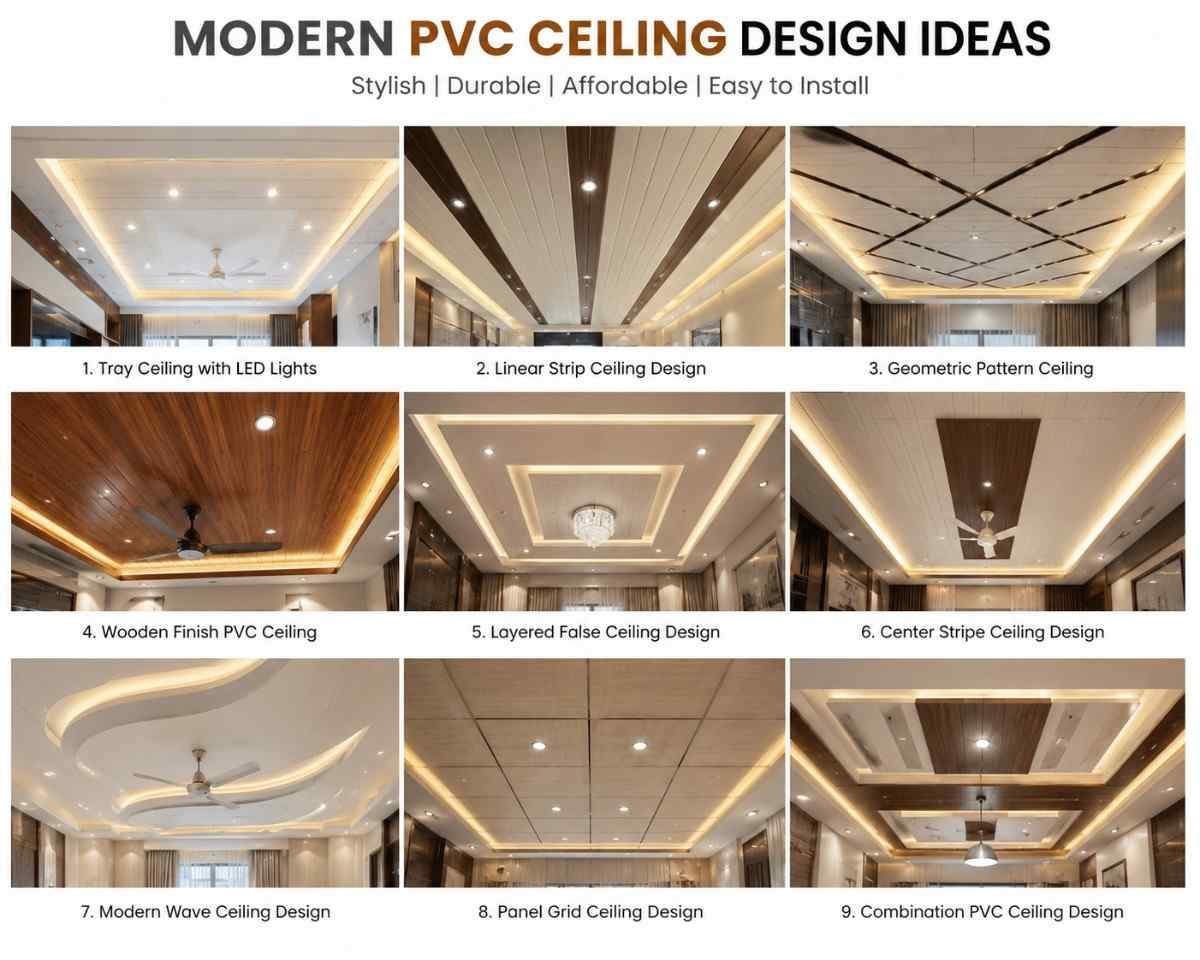
PVC ceiling design has become a practical standard in modern interior construction because it solves three real problems: moisture damage, high maintenance ceilings, and rising renovation costs. In real projects, especially in humid climates like South Asia and coastal regions, PVC performs more consistently than gypsum or POP systems when properly installed on a rigid frame.
Design Period guide is written from a practical design and execution perspective, not theory, so you can confidently apply it in residential or commercial projects.
What Is PVC Ceiling Design in Real Interior Applications
PVC ceiling design uses extruded polyvinyl chloride panels fixed to a metal or treated wooden subframe. It functions as a false ceiling system, primarily used for concealment, aesthetics, and utility routing.
Why professionals use PVC ceiling systems
In real construction practice, PVC ceilings are selected for:
- Water-prone environments like bathrooms and kitchens
- Fast-track renovation projects
- Budget-sensitive residential interiors
- Commercial spaces requiring easy maintenance access
Why PVC replaced older false ceiling materials in many projects
PVC replaced POP and reduced dependency on gypsum in certain applications because:
- It does not absorb moisture
- It does not require painting or finishing
- It installs faster with fewer labor errors
- It reduces long-term maintenance cycles
However, PVC is not used in every luxury interior. Designers avoid it in ultra-premium spaces where seamless gypsum finishes or curved architectural ceilings are required.
Types of PVC Ceiling Panels Used in Interior Projects
Standard flat PVC ceiling panels for homes
These panels are used in residential spaces where simplicity and budget control matter. They deliver a clean surface but limited depth in design expression.
Laminated PVC ceiling sheets for decorative interiors
Laminated sheets replicate:
- Wood textures
- Marble finishes
- Glossy modern surfaces
These are commonly used in living rooms and retail interiors where visual appeal is important.
3D PVC ceiling panels for feature ceilings
3D panels are used only on focal zones such as:
- TV walls integrated ceilings
- Reception areas
- Feature lighting ceilings
They are not recommended for full-room coverage in small spaces because they visually compress height.
Grid-based suspended PVC ceiling systems
This system uses a visible or semi-hidden grid. It is widely used in:
- Offices
- Clinics
- Shops
- Commercial buildings requiring service access
PVC Ceiling Design Ideas by Room (Practical Use Cases)
PVC ceiling design for bedrooms
For bedrooms, designers use PVC only when maintenance is a priority. The best execution includes:
- Matte white or soft wood-finish panels
- Indirect LED cove lighting
- Minimal joint visibility
Avoid overly reflective finishes in sleeping spaces—they create unnecessary visual noise.
PVC ceiling design for living rooms
Living rooms require controlled detailing:
- Use wood-texture PVC on borders only
- Keep center area clean and flat
- Integrate warm LED strip lighting
Full PVC coverage in living rooms works best in mid-budget homes, not luxury interiors.
PVC ceiling design for kitchens
This is one of PVC’s strongest applications:
- Install heat-resistant spacing above cooking zones
- Use white or light grey panels for hygiene visibility
- Ensure proper exhaust ventilation to avoid heat buildup
PVC ceiling design for bathrooms
PVC performs best here:
- Use sealed interlocking panels
- Ensure slope correction for condensation management
- Avoid dark colors in small bathrooms (they show water marks easily)
PVC ceiling design for halls
Hall ceilings should maintain height perception:
- Use linear designs, not heavy 3D patterns
- Combine PVC borders with gypsum centers when budget allows
- Integrate recessed lighting instead of surface fixtures
PVC ceiling design for offices
In offices, functionality matters more than aesthetics:
- Use grid systems for cable access
- Install acoustic-backed panels where noise control is needed
- Keep maintenance zones accessible without dismantling entire ceiling
PVC Ceiling Design in Commercial Spaces
Office ceiling systems using PVC
PVC works well in service-oriented offices where maintenance access is frequent. It reduces downtime during electrical or networking repairs.
Retail and shop ceiling applications
Retail spaces use PVC ceilings for:
- Clean lighting reflection
- Branding-focused illumination
- Fast renovation cycles during store updates
PVC Ceiling vs Gypsum, POP, and Wood Systems
PVC vs gypsum ceiling systems
- PVC: waterproof, modular, low maintenance
- Gypsum: seamless finish, higher aesthetic value, moisture sensitive
PVC vs POP ceilings
- POP: highly customizable shapes and curves
- PVC: faster installation, limited sculptural design capability
PVC vs wood and aluminum ceilings
- Wood: premium appearance but high maintenance and cost
- Aluminum: industrial durability but limited residential warmth
- PVC: balanced cost-performance solution for functional interiors
PVC Ceiling Installation Process (Professional Method)
Frame preparation (critical step)
Install a leveled metal channel grid system. Poor framing is the most common cause of PVC ceiling failure.
Panel fixing using interlocking joints
PVC panels use:
- Tongue-and-groove locking
- Screw or clip-based fastening depending on system type
Alignment accuracy determines final finish quality.
Final detailing and lighting integration
- Seal perimeter edges properly
- Install LED strips inside recessed channels
- Ensure ventilation openings in enclosed areas
PVC Ceiling Price and Real Cost Factors
Cost per square foot
PVC ceiling cost varies based on:
- Panel thickness (typically 6–12 mm in most markets)
- Surface finish quality
- Frame material (steel vs wood)
- Labor expertise
What actually increases cost in real projects
- Complex lighting layouts
- Curved or multi-layer ceilings
- Imported decorative PVC sheets
Budget PVC ceilings are achieved only when design remains simple and linear.
Advantages and Limitations of PVC Ceiling Systems
Technical advantages
- Fully waterproof structure
- Resistant to termites and corrosion
- Quick installation with low labor dependency
- Easy replacement of damaged panels
Real limitations designers consider
- Cannot achieve seamless luxury finishes like gypsum
- Expands under extreme heat if poorly ventilated
- Not suitable for high-end architectural ceiling designs
Modern PVC Ceiling Design Trends (2026)
Minimal linear ceiling systems
Designers now prefer straight-line layouts instead of heavy panel grids.
Integrated LED ceiling architecture
Lighting is no longer added later—it is embedded into the ceiling plan.
Wood-finish PVC in warm interiors
Used as a cost-efficient alternative to real wood in mid-range interiors.
3D feature zoning (not full ceilings)
3D PVC is now used only as accent zones, not full surface coverage.
Best Color Strategy for PVC Ceilings
White and neutral tones
Best for:
- Small rooms
- Low ceiling heights
- Offices
Wood textures
Used to add warmth in:
- Bedrooms
- Living rooms
- Hospitality spaces
Dark tones (limited use only)
Used only in:
- Large halls
- High ceilings
Improper use makes spaces feel smaller and heavier.
Maintenance Guidelines Used by Professionals
Cleaning method
Use:
- Mild detergent solution
- Soft microfiber cloth
Avoid abrasive pads completely.
Heat and moisture control
PVC performs best when:
- Proper ventilation is installed
- Heat sources are not directly above panels
Long-term durability practice
Inspect joint lines every 12–18 months in high-humidity areas.
PVC Ceiling Design FAQs (Expert Answers)
What are the disadvantages of PVC ceiling?
PVC ceilings have limited design flexibility for luxury architectural detailing and can deform under prolonged high heat exposure if ventilation is poor.
Which ceiling is trending in modern interiors?
Minimal gypsum ceilings with LED integration lead luxury projects, while PVC dominates budget and moisture-prone installations.
Which is better, PVC or WPC ceiling?
WPC offers higher rigidity and a more natural finish. PVC is more cost-effective and better for wet environments.
Which color PVC ceiling is best?
White, off-white, and light wood tones perform best across most residential and commercial applications.
Final Expert Insight
PVC ceiling design is not a luxury ceiling system—it is a high-performance functional solution. When used correctly, especially in kitchens, bathrooms, offices, and mid-budget homes, it delivers long-term durability with minimal maintenance.
However, in premium architectural interiors, designers strategically combine PVC only where function matters and shift to gypsum or custom systems where aesthetics dominate.
That is how professionals actually use PVC—not as a universal ceiling solution, but as a targeted, engineered interior material.