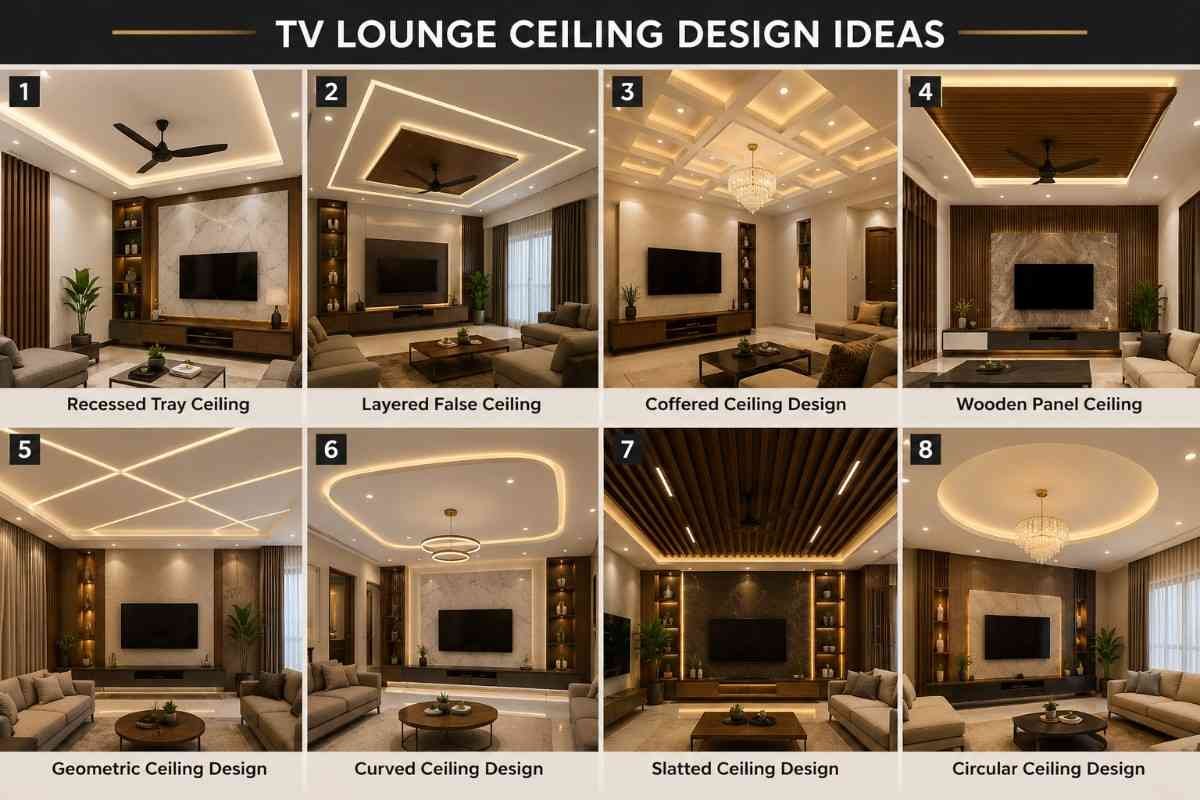
Introduction: Why TV Lounge Ceiling Design Matters More Than You Think
A well-planned TV lounge ceiling design directly controls how comfortable, modern, and visually balanced your living space feels. In professional interior design, the TV lounge is not just a seating area—it is the central visual zone of the home.
Most design failures happen because homeowners focus only on furniture and ignore ceiling structure and lighting integration. The result is a space that feels either too dark, too flat, or visually disconnected.
A properly designed ceiling solves three critical problems:
- Improves viewing comfort by controlling glare
- Enhances room depth and proportion
- Creates a cohesive modern interior aesthetic
Modern TV Lounge Ceiling Design Trends Transforming Living Rooms
Minimalist false ceiling designs for clean interiors
Modern interiors now use simple gypsum-based flat ceilings with sharp edges. This removes unnecessary visual noise and keeps attention on the TV wall and seating zone.
LED cove lighting for ambient lounge aesthetics
Cove lighting is installed along recessed ceiling edges to produce indirect light. It eliminates harsh shadows and creates a soft, cinematic atmosphere ideal for TV viewing.
Smart lighting systems for modern TV lounges
Advanced homes now use adjustable lighting systems that change brightness and tone depending on usage—movie mode, relaxation mode, or guest mode.
Best False Ceiling Design Ideas for TV Lounge Spaces
Gypsum ceiling design for smooth modern finish
Gypsum boards are the standard in modern construction because they deliver clean surfaces, structural stability, and seamless lighting integration.
POP ceiling design for decorative styling
POP is used for curved or decorative detailing. It is not structural but works well for artistic ceiling shapes in larger lounges.
Layered ceiling designs for depth and dimension
Multi-level ceilings create architectural depth and help define seating zones within open-plan living areas.
TV Lounge Lighting Design for Perfect Viewing Experience
Recessed lighting placement for glare-free viewing
Recessed lights must be positioned away from direct TV reflection angles. Poor placement creates screen glare and visual discomfort.
LED strip lighting for ceiling edge illumination
LED strips placed inside ceiling coves produce indirect light that enhances ambiance without affecting screen visibility.
Pendant and accent lighting for luxury interiors
Pendant lights work best over side tables or lounge corners. They are not placed directly in front of the TV zone.
Small TV Lounge Ceiling Design Ideas for Compact Homes
Space-enhancing minimalist ceiling layouts
Small lounges require flat ceilings with minimal drops to preserve height perception.
Low-height ceiling optimization techniques
Avoid heavy layering. Use perimeter lighting instead of deep ceiling drops.
Simple LED-based false ceiling solutions
A basic gypsum border with LED strips provides a clean and cost-effective upgrade.
Luxury TV Lounge Ceiling Design for High-End Interiors
Multi-layer gypsum ceiling with depth effects
Luxury interiors use layered ceilings to create controlled lighting zones and architectural depth.
Chandelier integration in lounge ceiling design
Chandeliers are used only in high-ceiling spaces and must be proportionally scaled to room size.
Architectural interior elevation styling
Ceiling design is integrated with wall elevation to create a unified luxury interior flow.
Materials Used in TV Lounge Ceiling Design
Gypsum board ceiling systems for durability
Gypsum is preferred for long-lasting, smooth, and flexible ceiling layouts.
POP decorative ceiling applications
Used only for ornamental shaping and design detailing.
PVC panels for low-maintenance ceilings
Best for areas requiring moisture resistance and easy cleaning.
TV Wall and Ceiling Design Integration for Modern Homes
TV feature wall and ceiling coordination
Designers align ceiling lighting with TV wall panels to create a focused entertainment zone.
Floating ceiling illusion techniques
Hidden LED strips create the illusion of a floating ceiling, increasing visual depth.
Hidden wiring and clean architectural finish
All electrical elements are concealed within the ceiling for a clutter-free appearance.
Common Mistakes in TV Lounge Ceiling Design
Over-lighting and visual clutter issues
Excess lighting destroys ambiance and creates discomfort during viewing.
Incorrect ceiling height proportions
Deep false ceilings in small rooms reduce perceived space.
Poor material selection for room type
Using gypsum in humid areas or POP in structural zones leads to long-term failure.
Step-by-Step Guide to Planning TV Lounge Ceiling Design
Analyzing room size and ceiling height
Design starts with accurate measurement of structural height.
Choosing lighting based on viewing comfort
Lighting must support screen visibility, not compete with it.
Selecting materials and ceiling layout
Gypsum is used for structure; POP for detailing; PVC for moisture-prone zones.
FAQs on TV Lounge Ceiling Design
What is the best ceiling design for a TV lounge?
A gypsum false ceiling with LED cove lighting and minimal detailing provides the best balance of style and function.
Which lighting is best for TV lounge ceiling design?
Indirect LED cove lighting combined with controlled recessed lights is ideal.
What is the cost of false ceiling design for TV lounge?
Cost varies based on materials and complexity, with gypsum being the most widely used mid-range option.
Is gypsum or POP better for TV lounge ceiling?
Gypsum is structurally stronger and faster to install, while POP is used only for decorative shaping.
How do I design a small TV lounge ceiling?
Use a flat gypsum ceiling with perimeter LED lighting and avoid deep layering.
Final Expert Note
A successful TV lounge ceiling design is not about decoration—it is about spatial control, lighting precision, and architectural balance. When properly executed, it transforms a basic living room into a visually structured, comfortable, and modern entertainment space.