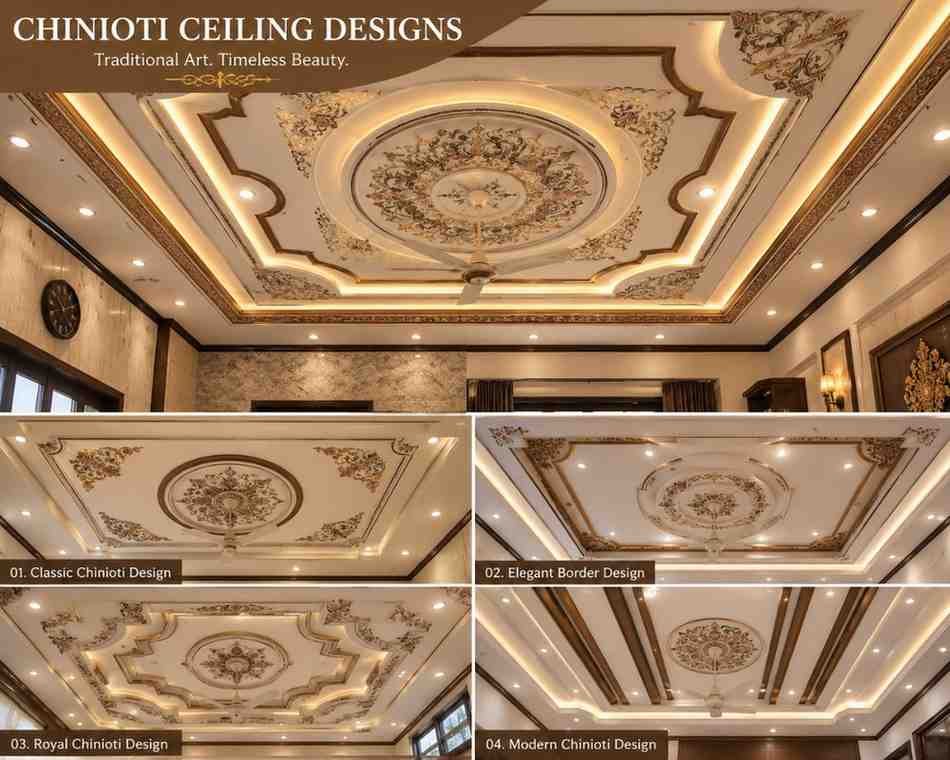
Chinioti ceiling designs represent one of the most refined traditional woodworking styles in South Asian interiors, originating from Chiniot, a historic city in Punjab known for its master wood artisans. Unlike mass-produced ceiling systems, these designs are handcrafted, deeply detailed, and built to reflect architectural heritage.
In modern interiors, they are used to bring warmth, luxury, and cultural identity into spaces that otherwise rely on plain gypsum or POP ceilings.
However, when poorly planned, these ceilings can feel heavy, outdated, or structurally impractical in modern homes. This guide explains how to use them correctly in contemporary design without losing functionality.
Core Challenges with Chinioti Ceiling Designs
1. Excessive Visual Weight in Small Rooms
Traditional carved ceilings can overwhelm compact spaces if pattern density is not controlled.
2. Maintenance Sensitivity
Natural wood requires protection from humidity, termites, and dust accumulation in carved grooves.
3. Improper Integration with Modern Lighting
Many installations fail because lighting is added as an afterthought, creating shadows that distort carved details.
4. Lack of Structural Planning
Without proper support framing, heavy wooden panels can create long-term sagging issues.
Expert-Approved Types of Chinioti Ceiling Designs
1. Traditional Hand-Carved Wooden Ceiling Panels
This is the most authentic form of Chinioti ceiling designs, crafted entirely by hand.
Characteristics:
- Deep floral and geometric carving patterns
- Solid or semi-solid wood panels
- Highly detailed central medallions
Best use:
- Formal living rooms
- Majlis or guest seating areas
- Heritage-style interiors
Professional insight:
These ceilings work best in rooms with higher ceiling heights (above standard residential height) to balance visual weight.
2. Chinioti Ceiling with Central Dome Medallion
A dome-style centerpiece is a classic architectural feature.
Design structure:
- Central carved wooden dome or medallion
- Simplified surrounding ceiling grid
- Focused chandelier integration
Why designers use it:
It creates a strong focal point without covering the entire ceiling in heavy carving, making it more practical for modern homes.
3. Modern Simplified Chinioti Ceiling Design
This is a contemporary adaptation of traditional craftsmanship.
Key features:
- Reduced carving density
- Clean perimeter wooden borders
- Selective decorative panels instead of full coverage
Where it works best:
- Modern villas
- Luxury apartments
- Fusion-style interiors
Expert note:
This version preserves cultural identity while maintaining visual balance in minimal interiors.
4. Chinioti Ceiling with Lattice (Jali) Integration
Inspired by traditional wood latticework, this design adds airflow and visual depth.
Features:
- Intricate jali-style wooden panels
- Light diffusion through carved openings
- Layered ceiling depth effect
Application:
- Lounge areas
- Dining rooms
- Semi-open interior courtyards
5. Hybrid Ceiling: Chinioti Wood + Modern False Ceiling
A highly practical modern solution.
Structure:
- Gypsum or POP base ceiling
- Chinioti wooden elements used as borders or focal inserts
Why this works:
- Reduces cost compared to full wood coverage
- Improves structural safety
- Allows integrated LED lighting systems
Material Selection for Chinioti Ceiling Designs
1. Solid Sheesham Wood (Most Traditional)
- Strong grain structure
- Excellent carving capability
- Long-lasting with proper sealing
2. Engineered Wood (Modern Alternative)
- More stable in humidity
- Cost-effective compared to solid wood
- Suitable for large panels
3. Teak Wood (Premium Category)
- High resistance to moisture and termites
- Ideal for luxury interiors
- Higher cost but superior durability
Professional Installation Guidelines
1. Structural Load Assessment
Before installation, ceiling load capacity must be evaluated. Chinioti wood panels are heavier than gypsum or POP systems.
2. Anti-Termite Treatment (Mandatory)
All wood components must undergo chemical treatment before installation to prevent long-term infestation.
3. Proper Framework Design
Use engineered wooden battens or metal sub-frames to distribute weight evenly across the ceiling.
4. Controlled Finishing System
Natural polish or matte lacquer finish should be applied to protect carving details without blocking wood texture.
Lighting Strategy for Chinioti Ceiling Designs
Lighting defines whether these ceilings look premium or outdated.
Best lighting approaches:
- Warm LED chandeliers for central focus
- Hidden cove lighting around carved borders
- Accent spotlights to highlight carving depth
What to avoid:
- Harsh white lighting that flattens texture
- Overexposed direct lights that erase carving shadows
Common Mistakes in Chinioti Ceiling Design
- Using heavy carving in low-height rooms
- Ignoring ventilation and humidity control
- Mixing modern LED lighting without planning shadow effects
- Over-polishing wood, which removes natural texture depth
- Installing full wooden ceilings without structural reinforcement
Modern Trends in Chinioti Ceiling Designs (2026)
Interior designers are now blending tradition with minimalism:
- Selective carved ceiling panels instead of full coverage
- Neutral-toned wood finishes instead of dark heavy stains
- Integration with gypsum false ceilings for layered depth
- LED lighting designed specifically to enhance carving shadows
- Fusion interiors combining traditional craft with modern geometry
The direction is clear: less coverage, more precision, higher craftsmanship value.
Final Expert Insight
A well-executed Chinioti ceiling design is not about filling a ceiling with carvings—it is about controlled craftsmanship. The real value lies in proportion, material selection, and integration with modern lighting systems.
When properly designed, it transforms a room into a high-end cultural statement. When overused, it becomes visually heavy and outdated.
In professional interior practice, Chinioti ceilings are treated as feature architecture—not full surface decoration.
- Car Porch Ceiling Design –
- TV Lounge Ceiling Design –
- Wall Ceiling Design –
- PVC Ceiling Design –
- Roof Ceiling Design –
- False Ceiling Design for Drawing Room –
- False Ceiling Designs for Hall –
- Bathroom Ceiling Design
- Lounge ceiling Design
- Garage Ceiling Design
- Plaster of Paris Ceiling Design
- POP Ceiling Design